


Table of Contents
- What Makes Personalized Jewelry Cheap vs. Quality
- Gold-Filled vs Gold-Plated Jewelry: Understanding the Difference
- Signs of Poor Craftsmanship in Custom Jewelry
- How to Tell If Jewelry Is Real Gold
- Engraving Quality and Durability Red Flags
- Evaluating Clasp Quality, Plating Thickness, and Alloy Composition
- Ethical Sourcing and Resale Value: Hidden Quality Markers
- Conclusion
- Frequently Asked Questions
Last Updated: September 1, 2026
What Makes Personalized Jewelry Cheap vs. Quality
The difference between cheap personalized jewelry and quality pieces comes down to three core factors: materials, craftsmanship, and durability. Understanding these separates impulse purchases from keepsakes you'll actually treasure.
Cheap personalized jewelry typically uses base metals coated with a thin layer of gold or silver. The coating wears away within months, revealing discolored metal underneath. Quality personalized pieces, by contrast, use solid metals or substantial gold-filled construction that maintains their appearance for years. The engraving on cheap items often looks shallow and rough, while quality work shows crisp, consistent lettering.
When you're evaluating personalized jewelry, ask yourself: Will this survive daily wear? Does the clasp feel secure? Is the metal weight substantial? Cheap pieces fail these tests almost immediately. They're designed to look good in a photo, not to last through anniversaries and milestones.
At Gear Luxe Co, we focus on personalized jewelry built to become heirlooms rather than disposable gifts. Our approach prioritizes materials that age gracefully and craftsmanship that stands up to inspection.
Gold-Filled vs Gold-Plated Jewelry: Understanding the Difference
Gold-plated jewelry has a microscopic layer of gold bonded to a base metal, typically just a few millionths of an inch thick. Gold-filled jewelry, by contrast, has a substantially thicker gold layer (at least 5% of the item's total weight) mechanically bonded to a base metal core. The difference in durability is dramatic.
Gold-plated pieces tarnish and wear through within months of regular wear. The base metal shows through, creating dark patches and discoloration. Gold-filled jewelry can last 10-30 years with normal care (peer-reviewed research). If you see "gold-plated" listed without a thickness specification, that's a red flag, manufacturers hide this detail when the plating is especially thin.
Vermeil is a specific type of gold-plated jewelry where the base metal is sterling silver rather than cheaper alloys. This is a middle ground: better than standard gold-plating, but not as durable as gold-filled. Vermeil typically lasts 2-5 years with careful wear.
Here's what matters for personalized pieces specifically: engraving exposes the base metal underneath the plating. As you wear the jewelry, the engraved areas experience friction against clothing and skin, accelerating wear. Cheap plating fails fastest at these stress points. Quality gold-filled construction maintains its appearance even where the engraving is deepest.
When shopping for personalized jewelry, verify the exact construction method. "Gold-filled" is the baseline for anything you expect to wear regularly. Anything less than that is a temporary item, not a gift.
Signs of Poor Craftsmanship in Custom Jewelry
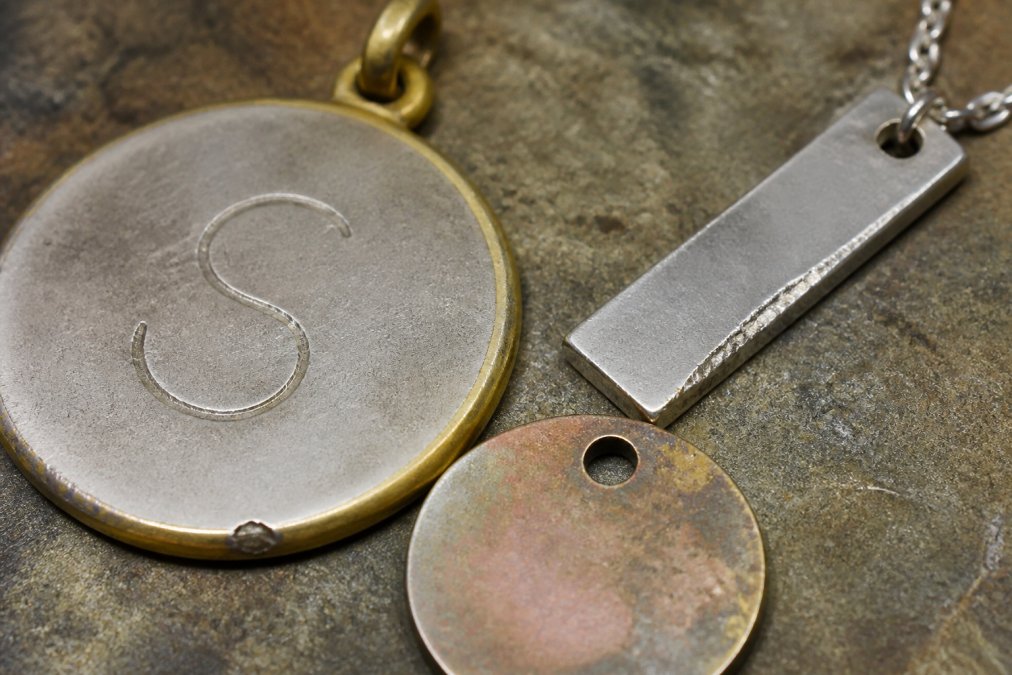
Poor craftsmanship reveals itself through specific visual and tactile cues. Start by examining the engraving itself. Quality engraving has crisp, clean lines with consistent depth. Letters sit at the same level, and the edges are sharp. Cheap engraving looks rough and uneven, some letters deeper than others, with jagged edges that catch your fingernail.
Run your finger across the engraved area. Quality work feels smooth; poor work feels scratchy and rough. This matters because rough engraving accelerates wear and catches on fabric, causing the piece to snag.
Check the clasp mechanism next. Cheap clasps use thin, flimsy metal that bends easily and doesn't hold securely. Quality clasps have substantial weight and a satisfying click when they close. A clasp that feels loose or wiggly is a sign the entire piece will fail quickly.
Look at solder joints, the places where different metal parts connect. Quality soldering is invisible or nearly invisible, with smooth transitions between pieces. Poor soldering shows visible beads of metal, rough edges, or gaps. These joints are stress points that fail under regular wear.
Examine the overall metal finish. Quality personalized jewelry has a consistent color and sheen across the entire piece. Cheap jewelry shows uneven coloring, dull patches, or a plasticky sheen that indicates thin plating. Run your finger along edges and crevices, rough spots and burrs indicate poor finishing.
The weight of the piece matters too. Pick up two similar necklaces and compare. Quality personalized jewelry has substantial weight that feels substantial in your hand. Cheap pieces feel hollow and light, which correlates directly with thinner metals and cheaper construction.
How to Tell If Jewelry Is Real Gold
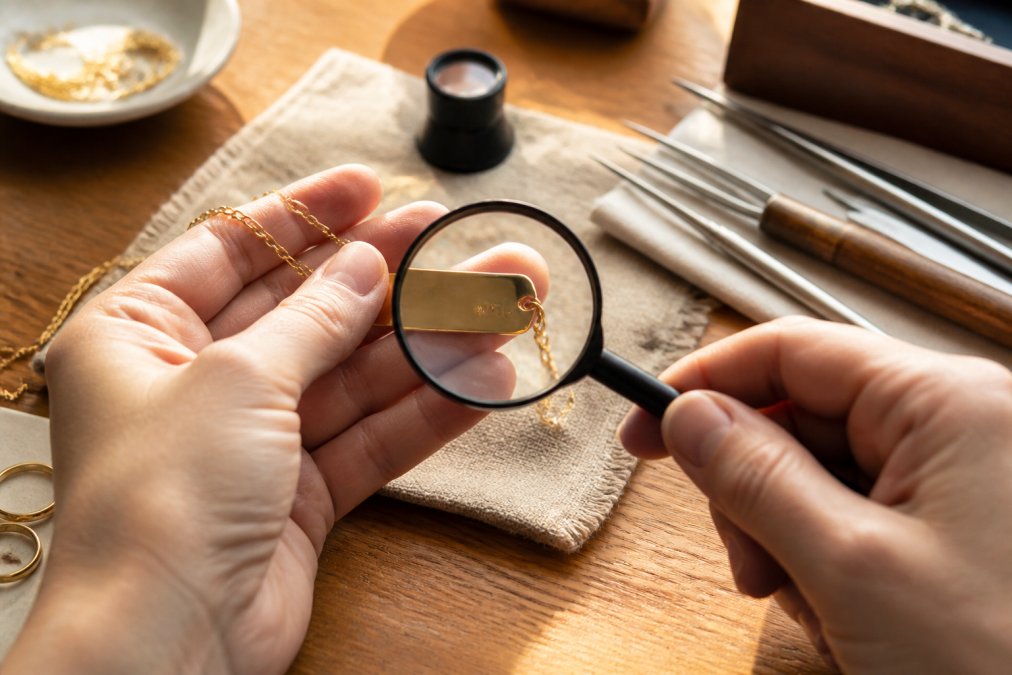
Real gold jewelry carries a hallmark, a tiny stamp indicating the karat weight. Look for marks like "14K," "18K," or "585" (which means 58.5% pure gold). These stamps are legally required in the United States for any item sold as gold jewelry (the FTC). If you see no hallmark, or a vague marking like "GP" (gold-plated) or "GF" (gold-filled), the piece is not solid gold.
Use a magnifying glass to examine the hallmark closely. Cheap jewelry either has no hallmark at all, or the stamp is poorly executed, shallow, uneven, or difficult to read. Quality gold jewelry has crisp, professional hallmarks that are easy to identify.
Real gold is dense and heavy. A solid gold necklace feels substantial; gold-plated versions feel light and hollow. This is one of the easiest tests you can perform without tools.
The magnet test works for some situations. Real gold is non-magnetic. If you hold a strong magnet near the jewelry and it's attracted, the piece contains ferrous metals and is not solid gold. However, some alloys used in gold jewelry can be slightly magnetic, so a negative result isn't definitive. Use this as a screening tool, not a final verdict.
For personalized items, pay special attention to the engraved areas. If the engraving exposes a different-colored metal underneath, the piece is gold-plated or gold-filled, not solid gold. Solid gold will show the same color throughout.
If you're serious about verifying authenticity, take the piece to a jeweler for professional testing. They can perform acid tests or use X-ray fluorescence (XRF) testing to determine exact gold content. This costs $20-50 but provides definitive answers for valuable pieces.
Engraving Quality and Durability Red Flags
Engraving is where cheap personalized jewelry fails most visibly. Poor engraving doesn't just look bad, it fails functionally, with the lettering wearing away or becoming illegible within months.
Quality engraving uses consistent depth and pressure throughout the entire design. Letters are evenly spaced and sit at the same level. The lines are crisp and clean, with no burrs or rough edges. When you run your finger across quality engraving, it feels smooth and intentional.
Cheap engraving shows obvious inconsistencies. Some letters are deeper than others. The spacing is uneven. The lines are rough and jagged, as if the tool was dragged rather than precisely controlled. This happens because cheap manufacturers use automated engraving equipment with poor calibration, or they rush the process to minimize labor costs.
Look for these specific red flags:
Shallow engraving that barely indents the surface. This wears away almost immediately, especially on pieces you wear daily. Quality engraving penetrates the metal substantially, creating depth that lasts.
Engraving that doesn't follow the metal's contours. On curved surfaces like round necklaces, cheap engraving looks distorted and uneven because the equipment doesn't account for the shape. Quality work adapts to the piece's geometry.
Engraving positioned off-center or at an odd angle. This suggests the piece wasn't properly secured during the engraving process, which also indicates quality control issues throughout production.
Filled-in engraving (where the letters appear solid rather than recessed). This typically indicates the engraving was done with a laser that burns rather than cuts the metal. Laser engraving on jewelry is cheaper but less durable than mechanical engraving, especially on delicate personalized pieces.
For personalized jewelry you plan to wear daily, mechanical engraving (hand-engraved or precision machine-engraved) is superior to laser engraving. It creates deeper, more durable marks that withstand years of wear.
Evaluating Clasp Quality, Plating Thickness, and Alloy Composition
The clasp is where most cheap personalized jewelry fails first. A necklace is only as strong as its weakest link, literally.
Quality clasps use substantial metal (typically 14K gold or sterling silver) with secure mechanisms that hold reliably. They should feel heavy and substantial in your hand. When you close a quality clasp, you hear or feel a satisfying click. The mechanism should require deliberate effort to open, not something that happens accidentally.
Cheap clasps use thin metal that bends easily. They feel flimsy when you handle them. The closure is loose and unreliable, meaning the necklace can fall off without warning. For personalized jewelry meant as a gift, this is unacceptable.
Plating thickness determines how long the piece will maintain its appearance. Thick plating (20+ microns) lasts years. Thin plating (under 5 microns) wears through in months (astm.org). Quality manufacturers specify plating thickness; cheap ones don't.
When evaluating alloy composition, understand what you're actually buying. Solid gold is straightforward, the hallmark tells you the karat weight. For gold-filled or gold-plated pieces, ask:
What's the base metal? Sterling silver is better than brass or nickel-plated base metals. Nickel causes allergic reactions in many people, so avoid it entirely for personalized jewelry that touches skin.
What's the plating thickness? Demand a specific number (measured in microns). If the seller won't provide this, assume it's minimal.
How is the plating bonded? Mechanically bonded plating (where the gold is pressed onto the base metal) is more durable than electroplated (where gold is deposited electrically). Quality manufacturers use mechanical bonding for items that will see regular wear.
For personalized necklaces that will be worn frequently, solid 14K gold or substantial gold-filled construction (at least 12K gold layer) with a sterling silver base is the practical minimum. Anything less will show visible wear within a year.
Ethical Sourcing and Resale Value: Hidden Quality Markers
Quality personalized jewelry holds value because it's made from durable materials sourced responsibly. Cheap jewelry depreciates immediately because it's not built to last.
Ethical sourcing matters for two reasons: it indicates the manufacturer cares about quality throughout their supply chain, and it means the materials themselves are reliable. Responsibly sourced precious metals come with documentation proving they weren't mined under exploitative conditions. This documentation also serves as proof of authenticity and material composition.
Cheap personalized jewelry often uses recycled or undocumented metals of questionable origin. These materials may contain impurities that accelerate tarnishing or cause allergic reactions. They're also impossible to resell because there's no way to verify their composition.
Resale value is a practical indicator of quality. Quality personalized jewelry retains 40-60% of its original value on the secondary market, even after years of wear. Cheap pieces are essentially worthless, most resale platforms won't even accept them because they're too damaged or obviously low-quality.
Before buying personalized jewelry as a gift, ask: If the recipient wanted to sell this in five years, would anyone buy it? If the answer is no, you're buying something disposable, not a keepsake.
Look for manufacturers who provide:
Documentation of material sourcing and composition. This proves authenticity and supports resale value.
Lifetime warranties or long-term repair guarantees. Cheap manufacturers won't stand behind their work because they know it will fail. Quality makers offer repairs because they expect their pieces to last decades.
Clear information about where personalization happens. Items engraved by skilled craftspeople in the United States command higher resale value than items engraved overseas by automated equipment.
Gear Luxe Co's personalized jewelry is assembled and shipped from a small business factory in the United States, which means you know exactly where your piece is made and by whom. This transparency supports both quality assurance and resale value, you can confidently tell future buyers where the piece came from.
Conclusion
Spotting cheap personalized jewelry comes down to understanding materials, inspecting craftsmanship, and asking the right questions before you buy. Real gold has hallmarks. Quality engraving is crisp and consistent. Clasps feel substantial and secure. The piece maintains its appearance under daily wear.
When you're shopping for personalized jewelry as a gift, choose pieces made from solid or gold-filled metals with substantial clasps and professional engraving. Verify material composition and plating thickness before purchasing. These details separate gifts that last decades from items that fail within months.
Gear Luxe Co offers personalized necklaces like our Classic Style Name Necklace and Signature Style Name Necklace, each assembled and shipped from our United States facility with quality craftsmanship and a 100% satisfaction guarantee. These pieces are designed to become meaningful keepsakes, not disposable gifts. When you invest in quality personalized jewelry, you're giving something that will be worn and treasured for years to come.


Frequently Asked Questions
What's the difference between gold-filled and gold-plated jewelry?
Gold-filled jewelry has a thicker layer of gold bonded to a base metal core, typically at least 5% of the total weight. Gold-plated jewelry has only a thin electroplated coating, often less than 1 micrometer thick. Gold-filled pieces generally offer better durability and value for the price compared to gold-plated options.
How can I tell if personalized jewelry is real gold?
Look for hallmarks stamped on the metal, like 10K, 14K, 18K, or 750 (which means 75% pure gold). Use a magnet test: real gold is not magnetic. Check the weight and feel; solid gold is noticeably heavier than plated pieces. For custom jewelry, reputable sellers often provide documentation of metal purity. Gear Luxe Co's personalized name necklaces use quality materials and include craftsmanship details so you know what you're receiving.
What are the biggest signs of poor craftsmanship in custom jewelry?
Watch for rough or uneven engraving edges, loose stones or settings, weak clasps that don't hold securely, and visible seams or solder lines. The metal should feel substantial and smooth. Cheap personalized jewelry frequently has misaligned text or shallow engravings that wear away quickly. High-quality custom pieces display clean, precise engraving and secure construction throughout.
Does personalized jewelry tarnish easily?
Tarnishing depends on the base metal and plating thickness. Sterling silver naturally oxidizes but is durable; gold-plated pieces may tarnish quickly if the plating is thin. Nickel-free, hypoallergenic materials can resist tarnishing longer. Proper care, storing in a dry place and avoiding harsh chemicals, extends life. Quality pieces with thicker plating and solid metals generally resist tarnishing better than budget alternatives.
This article was written using GrandRanker


