


Table of Contents
- Engraving vs Stamping for Long Lasting Jewelry: The Core Difference
- Hand-Stamped vs Engraved Jewelry: Appearance and Design Detail
- Does Hand-Stamped Jewelry Wear Off? Durability Under Daily Wear
- Hand Engraving vs Laser Engraving Jewelry: Which Method Wins
- Jewelry Engraving Cost: What You Pay and Why
- Metal-by-Metal Guide: Which Materials Hold Marks Best
- Repair, Refinishing, and Re-Engraving Worn Pieces
- Choosing Your Long Lasting Personalized Piece
- Frequently Asked Questions
Last Updated: October 21, 2026
Engraving vs Stamping for Long Lasting Jewelry: The Core Difference
The engraving vs stamping decision is the single biggest factor in how long a personalized piece keeps its mark. Engraving removes or vaporizes metal to cut a mark into the surface; stamping compresses metal with impact into a recessed impression. Both leave a permanent mark when done well; the difference comes down to depth, metal choice, and wear.
How Engraving Cuts or Vaporizes the Metal Surface
Engraving is a subtractive process: a cutting tool or laser beam removes material to create a groove. Hand engravers push a hardened steel graver to carve a V-shaped channel; laser engraving vaporizes a shallow layer of metal for fine detail and sharp edges. Because the mark sits below the surrounding metal, it holds detail well on flat, polished surfaces.
How Stamping Compresses Metal With Impact
Stamping is a displacement process: a steel tool is struck with a hammer, driving a raised letter into the metal and pushing it outward. The result is a recessed impression with slightly raised edges, and the surrounding metal is work-hardened by the impact. Hand stamping produces an organic, slightly imperfect look many buyers love.
Hand-Stamped vs Engraved Jewelry: Appearance and Design Detail
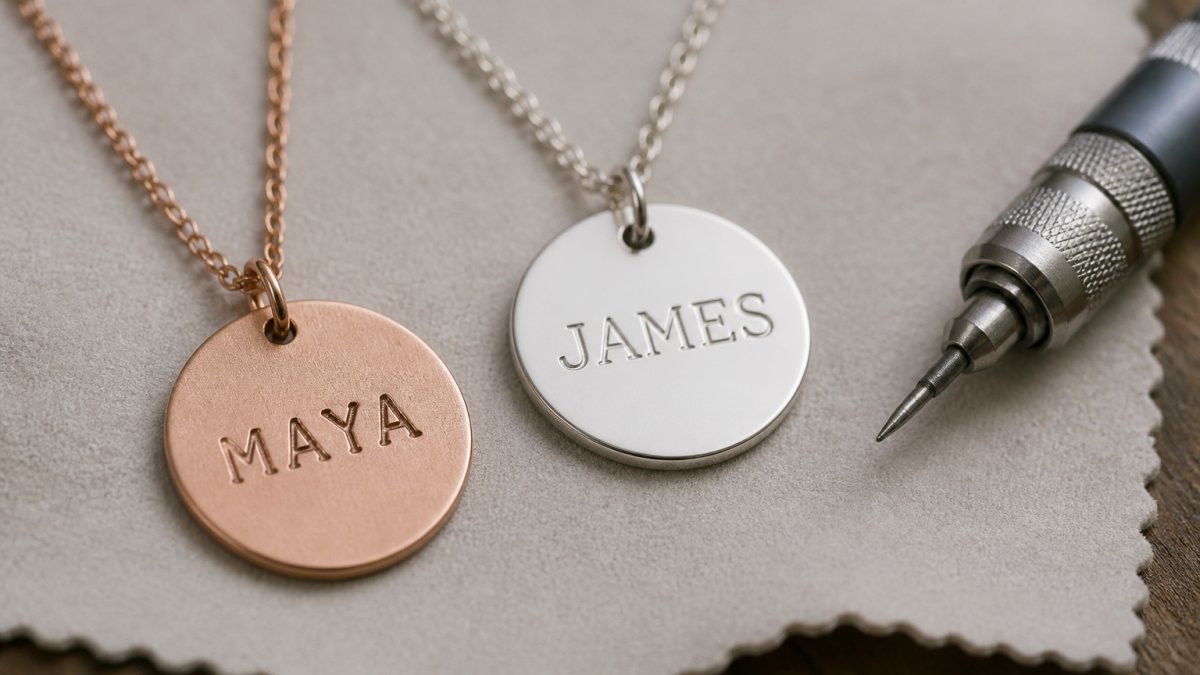
Hand-stamped vs engraved jewelry look meaningfully different, and that difference is the fastest way to tell them apart.
Does Hand-Stamped Jewelry Wear Off? Durability Under Daily Wear
Does hand-stamped jewelry wear off? No, not the way a printed or coated design does, because the letters are physically pressed into the metal rather than applied on top. Over years of daily wear the edges of the impression gradually soften as the surface polishes against skin, clothing, and other objects; the mark remains, but its crispness declines. Engraved marks behave the same way.
Mark Depth: The Spec That Predicts Longevity
Depth is the single best predictor of how a personalized mark ages. A shallow laser mark, often only a few thousandths of an inch deep, softens quickly under friction, while a hand-cut graver groove or firmly struck stamp goes deeper and keeps its edges far longer. A mark needs meaningful relief, not just surface contrast, to survive a decade of daily wear.
Metal Hardness: How the Alloy Fights Back
Hardness determines how fast wear rounds off a mark. Stainless steel and denser gold alloys resist abrasion well, so stamped and engraved marks hold their edges. Sterling silver takes a deep, beautiful impression but constant friction polishes the detail away faster, and aluminum and copper are softer still. Harder is not automatically better, though: very hard stainless can be tough to stamp deeply by hand, which is why method and metal must be paired.
Placement: Rings Wear, Pendants Endure
Where a piece sits on the body changes its real-world lifespan more than most buyers expect. A ring knocks against counters, grips, and door handles all day and rubs against adjacent fingers, so its mark faces constant abrasion. A pendant rests against fabric and skin with far less impact. If longevity is the priority, a deeper method on a pendant will outlast a shallower method on a ring by a wide margin.
The Wear Conditions That Actually Matter
Friction is the main enemy, but not the only one. Sweat, chlorinated water, cleaning chemicals, and repeated hand-washing all affect the surface around a mark. On sterling silver, tarnish can fill a groove and make a mark look duller than it is, which is a cleaning problem rather than a wear problem. On plated pieces, aggressive polishing can cut through the plating.
What Wear Actually Looks Like Over Time
In the first year, a well-made mark looks essentially unchanged. Over three to five years of daily wear, the sharpest edges begin to round, especially on rings and bracelets. By ten years, a deep mark on a hard metal is still clearly legible, while a shallow mark on a soft metal may read as a faint outline.
Hand Engraving vs Laser Engraving Jewelry: Which Method Wins
Hand engraving vs laser engraving jewelry is not a contest with one winner; it is a trade-off between character and consistency. Hand engraving cuts deeper, variable grooves with a graver, giving each piece a human signature and excellent longevity on daily-worn pieces. Laser engraving delivers hairline precision, handles tiny text and complex logos, and reproduces designs identically across many pieces.
Jewelry Engraving Cost: What You Pay and Why
Jewelry engraving cost tracks three variables: the method, the amount of text, and the metal. Simple machine or laser personalization of a few characters is the most affordable option and is often bundled into the price of a piece. Personalized name necklaces start at $39.95 in polished stainless steel or an 18K yellow gold finish, with the custom name included.

Metal-by-Metal Guide: Which Materials Hold Marks Best
Metal choice decides how well any mark survives, so match the method to the material rather than picking a metal first and a method second. Hardness, finish, and whether the piece is solid or plated all change the answer.
| Metal | Holds Stamping | Holds Engraving | Why It Behaves This Way |
|---|---|---|---|
| Stainless steel | Excellent | Very good | Hard and corrosion-resistant; resists the surface abrasion that softens shallow marks, though its hardness makes deep hand stamping more demanding |
| Sterling silver | Excellent | Excellent | Soft enough to mark deeply and cleanly, so both methods hold detail well; tarnishes over time, which dulls a mark's look before the mark itself wears |
| 18K gold | Very good | Excellent | Dense and durable; fine engraved detail holds beautifully, and the alloy resists wear well in daily use |
| Aluminum | Good | Fair | Light and soft; marks can soften faster under friction, so it suits casual or low-contact pieces |
| Copper | Good | Good | Soft and workable; takes a mark easily but patinas with age, which changes how the mark reads |
Stainless Steel: The Low-Maintenance Pick
Stainless steel is the practical choice for a piece worn every day. Its hardness resists the abrasion that rounds off mark edges, and it does not tarnish, so a stamped or engraved mark stays visually consistent without frequent polishing. The trade-off is that very hard stainless is harder to stamp deeply by hand, which is why machine or laser engraving is common.
Classic Heart Style Name Necklace →
Sterling Silver: Deep Marks, More Upkeep
Sterling silver is soft enough that both stamping and engraving produce deep, clean marks with excellent detail. That softness is also its weakness: constant friction polishes detail away faster than on harder metals, and tarnish fills grooves and dulls contrast. A sterling piece rewards occasional gentle polishing and benefits from a deeper method if worn daily.
18K Gold: Detail That Lasts
Dense 18K gold holds fine engraved detail beautifully and resists wear well in daily use. It is a strong match for engraving, where fine script and small symbols need a metal that will not smear under the tool. Stamping also works on gold, though the metal's cost makes a botched strike expensive, so hand stamping on gold rewards an experienced maker.
Aluminum and Copper: Casual Pieces Only
Aluminum is light and soft, and marks soften faster under friction, so it suits statement pieces and low-contact wear rather than daily rings. Copper takes a mark easily but patinas with age, which changes how the mark reads. Neither suits a piece that sees constant abrasion, but both are fine for casual jewelry.
Finish and Plating Change the Answer
Finish matters as much as the base metal. A high-polish surface looks bright but rounds mark edges fastest under friction, while a matte or brushed finish hides softening and slows the visual decline. Plated pieces add a wrinkle: aggressive polishing can cut through the plating, so a plated piece with a shallow mark has the least margin for refinishing.
The Practical Recommendation
If longevity is the priority, choose the harder metal and the deeper method: stainless steel or 18K gold with a cut or firmly struck mark, on a low-contact placement such as a pendant. For the deepest, most detailed mark with occasional polishing, sterling silver with engraving is excellent. Reserve aluminum and copper for casual pieces.
Repair, Refinishing, and Re-Engraving Worn Pieces
Worn marks are rarely a dead end. A jeweler can often refinish a piece by polishing the surface and re-cutting or re-stamping the personalization, restoring contrast and sharpness. The limits are practical: re-engraving removes a thin layer of metal, so it works best on pieces with enough material to spare, and a very shallow mark may need deepening rather than refreshing.
Choosing Your Long Lasting Personalized Piece
Choosing well comes down to four questions. First, how often will it be worn? Daily wear favors deeper marks and harder metals. Second, what design do you want? Flowing script and fine detail point to engraving; bold, rustic letters point to stamping.
Every personalized necklace is custom made to order and assembled and shipped from a small business in the USA, with a 100% customer satisfaction guarantee behind it. Our name necklaces, including the Classic Heart Style and Signature Style designs, are made in polished stainless steel or an 18K yellow gold finish, with the name of your choice included. Browse the collection and choose a piece made to be kept close for years.

Get started with Gear Luxe Co and give a gift that still reads clearly long after the occasion has passed.
Frequently Asked Questions
Which lasts longer on jewelry: engraving or stamping?
Both methods produce marks that outlast the piece itself when done properly. Stamping pushes metal downward, creating a groove that sits below the surface and resists rubbing. Engraving, whether hand or laser, removes or vaporizes a thin layer of metal, and deeper cuts hold up better than shallow ones. In practice, the deciding factors are cut depth, metal type, and how often the piece rubs against clothing or other jewelry. A deep stamp or engraving on stainless steel or gold will stay legible for years of daily wear.
Does hand-stamped jewelry wear off over time?
Hand-stamped jewelry does not wear off in the way a printed design would, because the letters are pressed into the metal rather than applied on top. What can happen is softening: repeated friction from rings, keys, or clothing gradually rounds the edges of shallow stamps. Deeper strikes and harder metals like stainless steel and gold resist this far better than soft silver or copper. Rotating pieces, storing them separately, and avoiding wear during heavy manual work all extend legibility.
How much does it cost to engrave jewelry?
Cost depends on the method and whether personalization is built into the piece. Laser engraving is typically the least expensive because it is automated, hand engraving costs more because an artisan spends time on each piece, and stamping often comes included in the price of a custom item. At Gear Luxe Co, personalized name necklaces start at $39.95, and the Classic Vertical Name Necklace and Believe In Yourself Dog Tag Necklace are $54.95, with personalization part of the listed price rather than a separate fee.
Can you engrave or stamp any type of metal?
Most jewelry metals accept both methods, but results vary. Stainless steel, gold, and sterling silver hold crisp marks and resist wear well. Copper and aluminum are softer, so stamps and cuts can blur faster with daily use. Very thin or hollow pieces can distort under a stamping hammer, which is why engraving is often the better choice there. If a piece is plated, deep engraving can cut through the finish, so shallow laser work is usually safer.


