


Last Updated: November 4, 2026
Quick Summary
Eco friendly custom drinkware customization methods include laser engraving, screen printing, UV printing, and pad printing; choose based on the cup’s material, design, and expected use. No method is always greener, so ask suppliers about inks or coatings, durability, production waste, and how decoration affects disposal.
- Laser engraving marks the item, while screen printing applies ink.
- UV printing can suit detailed graphics on compatible surfaces; pad printing can transfer designs onto curved areas.
- Ask suppliers for ink or coating documentation and care instructions.
- Check disposal guidance for each drinkware component and your local recycling program.
Table of Contents
- Eco Friendly Custom Drinkware: Choose the Decoration for Its Use
- 1. Laser Engraving vs Screen Printing for Tumblers
- 2. Eco-Friendly Ink for Custom Drinkware
- 3. UV Printing and Pad Printing: Match the Process to the Design
- 4. Sustainable Materials, Reuse, and End-of-Life Choices
- 5. Best Practices for Sustainable Corporate Gifting
- Choose a Custom Tumbler That Fits the Recipient
- Frequently Asked Questions
Eco Friendly Custom Drinkware: Choose the Decoration for Its Use
No verified data here supports a claim that one decoration method is always greener. Our practical rule at Gear Luxe Co is to match the design to how the drinkware will be used, then check the material and end-of-life details. Eco friendly custom drinkware customization methods are ways to add a design to reusable cups while weighing durability, material use, and disposal. The choice matters because a reusable item only supports waste reduction if the recipient actually uses it.
Custom drinkware is reusable drinkware personalized with a design, message, or brand identity. Below, we compare five decoration approaches and show what to ask suppliers before ordering. The main point most guides miss: the decoration is only one part of the environmental picture.
| Method or choice | Often suits | Ask before ordering |
|---|---|---|
| Laser engraving | Metal designs | What surface is marked? |
| Screen printing | Simple, repeat designs | Which ink and curing process? |
| UV or pad printing | Detailed or curved designs | How does the print wear? |
| Reusable materials | Repeated daily use | What are disposal instructions? |
1. Laser Engraving vs Screen Printing for Tumblers
Laser engraving vs screen printing for tumblers comes down to the design and the surface: engraving marks the item, while screen printing applies ink. For a simple graphic repeated across a bulk order, printing may fit; for a clean design on a compatible metal surface, engraving avoids a printed layer. Neither method alone proves that a tumbler is sustainable.
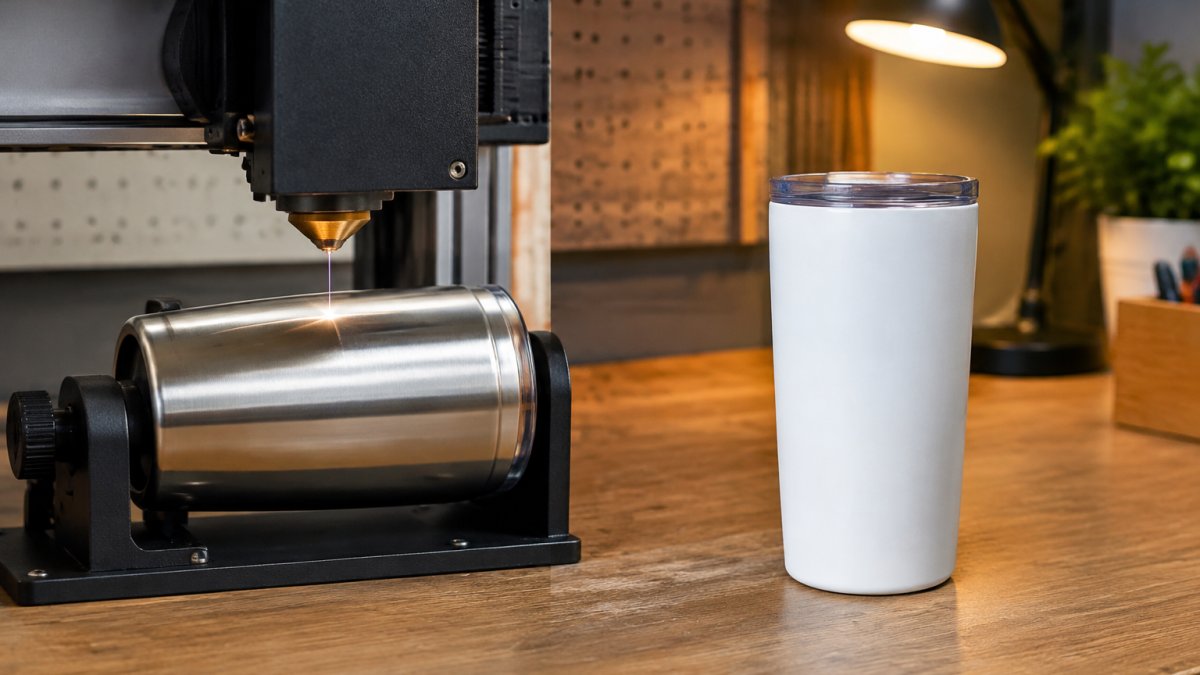
A common mistake is choosing by appearance alone. Ask about the substrate, abrasion resistance, cleaning instructions, and whether the decoration affects recycling. For a recipient-focused gift, Gear Luxe Co’s Nurse - Tumbler has a front-only laser-engraved design on stainless steel with a durable exterior powder coating. Its listing also specifies hand-wash care? No: that instruction is not listed for this tumbler, so check the product details before cleaning.

For a broader look at how DIY and professional engraving differ, read DIY vs professional tumbler engraving.
2. Eco-Friendly Ink for Custom Drinkware
“Eco-friendly ink” is not a single regulated ink category, and “water-based,” “non-toxic,” and “food-safe” do not mean the same thing. Evaluate the ink as part of the finished decoration: its ingredients, the surface it is applied to, curing, expected wear, and whether it can contact food or drink. This is a more useful standard than choosing by a green label alone.
For drinkware, first establish where the decoration will sit. A logo on the outside of a cup is different from a print on a rim, interior, straw, or other surface that may contact the beverage or a person’s mouth. Ask the supplier to identify the ink or coating system and confirm its intended use on the specific substrate and finish. Request the applicable technical data sheet and safety data sheet; these documents describe product properties and handling, but do not by themselves prove that a finished cup is suitable for food contact.
Water-based formulations can reduce the use of some organic solvents, but the label does not describe the whole production footprint. Screen printing may involve screens, ink cleanup, wash water, and curing; UV printing uses ultraviolet light to cure ink and may create setup waste or rejected prints. Ask what cleaning process is used, how wastewater and leftover ink are managed, and whether the supplier can run a sample before production. These details help compare actual processes without assuming one ink family is always the greener choice.
Durability is also an environmental consideration: a logo that flakes or fades can make a usable cup less appealing, while an overly aggressive coating may complicate repair or recycling. Ask for care instructions and evidence of performance under the washing conditions the recipient is likely to use. Confirm whether the supplier’s durability information applies to the same cup material, finish, ink, and curing process you are ordering.
Watch out: Do not treat “non-toxic,” “water-based,” or a safety data sheet as proof of food-contact suitability, recyclability, or low environmental impact; request documentation for each specific claim and the finished product.
3. UV Printing and Pad Printing: Match the Process to the Design
UV printing and pad printing serve different design needs, so choose by surface shape, artwork detail, and expected handling. UV printing can suit detailed graphics on compatible surfaces; pad printing can transfer a design onto curved areas. Ask the supplier to confirm compatibility with the exact cup material and finish.
The environmental trade-off depends on more than the printing method. Request details about ink type, curing, setup waste, and whether misprints can be avoided in a small test run. Small-batch orders can prevent unwanted excess, while bulk production may reduce repeated setup; the better choice depends on how certain the design and quantity are.
For more on print durability and design selection, see personalized tumbler designs that resist peeling. Avoid promising “non-toxic” or “food-safe” without documentation for the specific ink and surface.
4. Sustainable Materials, Reuse, and End-of-Life Choices
A drinkware material is not sustainable in isolation: the relevant questions include what the cup is made of, how long it is likely to be used, whether its parts can be separated, and what disposal routes actually exist. Explore the benefits and trade-offs of eco-friendly drinkware. Stainless steel, glass, plastics, and plant-based components have different durability and end-of-life considerations. Ask for a component list rather than relying on a broad description such as “recycled” or “bamboo.” A bamboo lid, for example, does not make a cup wholly compostable or recyclable if it is attached to other materials.
Start by checking the product’s construction. Identify the cup body, lid, straw, seals, insulation, exterior coating, and decoration. For each part, ask whether it is removable and what material it contains. A vacuum-insulated metal cup may combine a metal body with plastic or silicone parts and a coated exterior; local recycling programs may not accept the assembled product, even if they accept some of its materials separately. The maker’s instructions and the local program’s accepted-material list should guide disposal.
Branded decoration can affect the end-of-life route. A printed layer, coating, adhesive, or mixed-material component may need to be removed or may prevent a part from being accepted in a particular recycling stream. Laser engraving avoids an added ink layer, but it does not make every tumbler recyclable everywhere: construction, coatings, and local collection rules still matter. Ask the supplier whether the decoration changes the recommended disposal method and whether any component should be separated before recycling.
Reuse only reduces reliance on disposable cups when the recipient actually uses the item. Match capacity, lid style, weight, cleaning needs, and portability to the recipient’s routine; a difficult-to-clean or inconvenient cup may be left unused. For a corporate order, confirm recipient numbers and preferences before choosing a quantity. A sample can help check whether the cup is comfortable to carry and whether the lid and straw suit the intended use.
At end of life, follow the manufacturer’s instructions first, then check the local recycling program for each separated material. The U.S. Environmental Protection Agency’s recycling guidance explains why accepted materials and collection practices vary by community (the EPA). If a cup is still usable but no longer wanted, consider reuse or donation where appropriate before disposal. Do not put a product in a compost stream merely because one component is described as compostable; verify that the complete item is accepted by the relevant program and that its conditions are met.
Watch out: Avoid promising that a cup is “recyclable” or “compostable” without specifying which components qualify and whether the intended local collection or processing system accepts them.
5. Best Practices for Sustainable Corporate Gifting
Best practices for sustainable corporate gifting begin with usefulness, honest claims, and a design recipients will keep using. Promotional merchandise should support brand identity without turning sustainability into an unverified claim. A reusable tumbler is a better fit when the recipient’s habits make reuse practical.
Use this short supplier checklist before approving an order:
- Confirm the cup’s material and component list.
- Ask for ink or coating documentation.
- Check washing and care instructions.
- Request disposal guidance for each component.
- Approve a sample before ordering in bulk.
- Match the quantity to confirmed recipients.
The FTC’s Green Guides for environmental marketing claims are a useful reference for avoiding broad or unclear environmental claims. For corporate gift planning, see how to order custom gifts for corporate clients.
Choose a Custom Tumbler That Fits the Recipient
The best custom tumbler is the one the recipient will use, with decoration and materials described clearly enough to assess. For a nurse, parent, or teacher, a profession- or relationship-themed design can make the gift feel personal without adding unnecessary packaging or complexity.
Gear Luxe Co’s Nurse - Tumbler features a 40-ounce capacity, laser-engraved front design, reusable straw, and a lid with a two-position swivel closure and slider. Its listing states that the tumbler is BPA-free and compatible with most car cup holders. Check the product page for current care and order details before purchasing.
The challenge is separating meaningful design from vague environmental promises. Gear Luxe Co offers personalized tumblers and other thoughtful gifts, with products primarily assembled and shipped from a small business factory in the United States. Get started with Gear Luxe Co by choosing a gift that reflects the recipient and reviewing its listed materials and features.
Frequently Asked Questions
What are the most sustainable ways to print on custom drinkware?
Choose a reusable item suited to regular use, then match the decoration to its material and intended lifespan. Laser engraving marks a coated stainless steel tumbler without adding a printed ink layer. For printed designs, ask the supplier what ink is used, how it is cured, and what care the decoration needs. No method is automatically sustainable: material sourcing, production quantity, durability, and end-of-life handling all affect the overall choice.
Is screen printing eco-friendly for custom tumblers?
Screen printing can be a reasonable option when the ink and production process are clearly specified, but the method alone does not establish an environmental benefit. Ask whether the ink is water-based or solvent-based, what cleanup requires, and how well the decoration holds up with washing. For a small gift order, also ask about minimum quantities and leftover stock. Compare those details with engraving, which avoids a printed ink layer.
What is the difference between laser engraving and screen printing for drinkware?
Laser engraving creates a design by marking the surface, while screen printing applies ink through a screen. Engraving suits simple designs and avoids a printed ink layer; screen printing can apply colored artwork, but its environmental profile depends on the ink and production process. Gear Luxe Co's Nurse Tumbler is listed as laser engraved, with a stainless steel body and durable exterior powder coating. Its listing specifies front-only engraving.
Are there non-toxic ink options for custom reusable bottles?
The research provided does not verify particular ink brands or certify an ink as non-toxic. Ask the supplier for the ink's technical and safety documentation, whether it is intended for the drinkware's surface, and whether the decoration can contact food or drink. Do not assume a water-based label proves the finished item is food-safe. For drinkware with no added printed ink layer, compare laser engraving, while still checking the product's material and care instructions.
How does UV printing compare to traditional methods for eco-friendly products?
The research does not provide verified lifecycle data or product-specific environmental measurements for UV printing, so it cannot establish that UV printing is greener than screen printing or engraving. Ask the decorator about ink composition, curing, waste, durability, and end-of-life handling. Compare those answers with the design requirements: UV printing may suit artwork that needs color, while laser engraving marks the surface without a printed ink layer.


