


Table of Contents
- Why Personalized Gift Returns Get Denied: The Core Reasons
- Understanding Your Custom Item Return Policy
- Non-Returnable Personalized Items: What You Need to Know
- Damaged Personalized Item Replacement: When Defects Matter
- How to Dispute a Denied Refund: Your Appeal Checklist
- Personalization Errors vs. Defects: The Critical Distinction
- How to Prevent Denial Before You Order
- Frequently Asked Questions
Last Updated: October 13, 2026
Why Personalized Gift Returns Get Denied: The Core Reasons
When you order a personalized gift, you're investing in something meaningful. A custom necklace with a loved one's name. A leather journal with initials engraved. A tumbler with a special date. These items feel permanent, irreplaceable. So when a return request gets denied, it stings.
The truth is simpler than most people think: personalized gift returns are denied for specific, predictable reasons. Once you understand them, you can avoid the frustration entirely.
Here's what sets personalized items apart from regular products. They're made specifically for one person, with details chosen by you. That customization is what makes them special. It's also why most return policies treat them differently. A standard shirt can go back on the shelf. A necklace engraved with "Sarah" cannot.
The seven key reasons personalized gift returns get denied fall into three categories: policy exclusions, condition issues, and proof problems. Each one is preventable if you know what to watch for before you order.
Understanding Your Custom Item Return Policy
Every seller has a return policy. For personalized items, that policy is usually stricter than for standard products. This isn't punishment. It's economics. A custom item has no resale value once it's personalized.
Most sellers make personalized gifts final sale. That means no returns, no refunds, no exceptions. Some allow returns only within a narrow window, like 14 days. Others permit exchanges but not refunds. A few offer full returns if the item arrives damaged or defective.
The policy exists at the moment you place your order. It's printed on the product page, in the terms of service, or in the checkout confirmation. Many customers skip reading it. That's the first mistake.
Before you buy any personalized gift, take two minutes to find the return policy. Look for these phrases:
- "Final sale items"
- "Non-returnable"
- "Custom items excluded"
- "Personalized orders cannot be returned"
- "Returns accepted within X days"
If the policy says personalized items are final sale, that's binding. You agreed to it when you checked out. A refund request after that point will be denied, even if you change your mind.
Some sellers do allow returns on personalized items, but only under specific conditions. They might accept returns if the item is damaged, misspelled, or defective. They won't accept returns because you don't like the font or the recipient didn't appreciate it.
Understanding this distinction before you order saves heartbreak later. Read the policy. Know what's returnable and what isn't. If you're uncertain, contact the seller before buying.
Non-Returnable Personalized Items: What You Need to Know
Many sellers classify personalized gifts as non-returnable items by default. This is standard practice across the industry. Why? Once a name, date, or custom detail is added, the item belongs to one person. It has no market value to anyone else.
Non-returnable doesn't mean defective items are your problem. It means buyer's remorse isn't covered. You ordered a personalized necklace, received it exactly as described, but decided it wasn't the right choice. That's on you, not the seller.
The line between "non-returnable" and "returnable if defective" matters. Here's how sellers typically draw it:
Non-returnable scenarios:
- You don't like the design or font
- The recipient didn't appreciate the gift
- The size doesn't fit your expectations
- You changed your mind about the personalization
- The item is in perfect condition but not what you wanted
Returnable scenarios (even if marked non-returnable):
- The engraving is misspelled
- The item arrived damaged or broken
- The color is drastically different from the photo
- The material is defective (peeling, cracking, fading)
- The item was never personalized (blank when it should be custom)
The key word is "defect." A defect is a flaw in the product itself, not a flaw in your choice. Gear Luxe Co stands behind every item with a 100% customer satisfaction guarantee. If something is wrong with the product, we make it right.
If you're ordering from another seller, check whether they distinguish between these two categories. Some do. Some treat all personalized items as completely final sale, with zero exceptions.
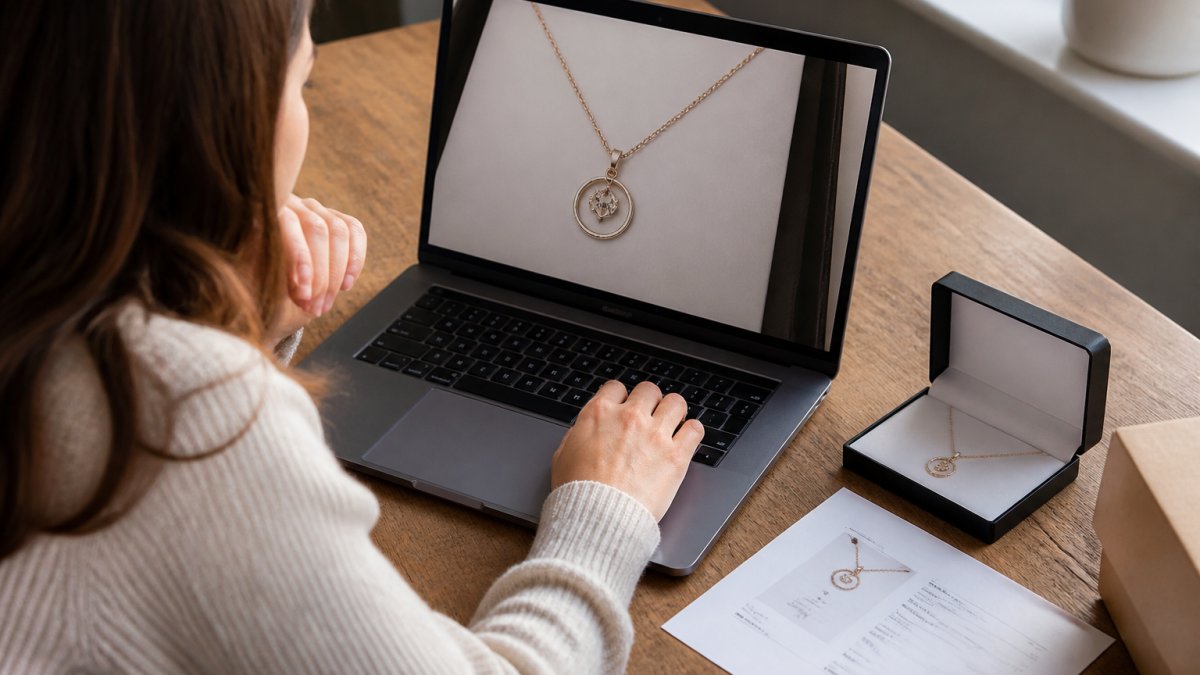
Damaged Personalized Item Replacement: When Defects Matter
A damaged personalized item is different from an unwanted one. If your custom necklace arrives with a broken clasp, that's a defect. If it arrives and you don't like the cursive font you selected, that's a preference.
Sellers almost always replace damaged items. They have to. A product that breaks in shipping or arrives with visible damage is the seller's responsibility, not yours. Personalization doesn't change this.
The challenge is proving the damage. You need to document it immediately. Take photos of the item as it arrived, including the packaging. If the box was crushed, photograph that. If the necklace has a crack, show it clearly. If the engraving is smudged or incomplete, capture it in detail.
Email those photos to the seller within 48 hours of receiving the item. Include your order number, the date you received it, and a clear description of what's wrong. Don't wait a week. Don't open the packaging fully and then report damage. The sooner you report, the faster they'll replace it.
Most sellers will replace a damaged personalized item without question. They'll either send a replacement or issue a refund. The replacement usually ships faster because the seller already has your customization details on file.
If the seller refuses to replace a clearly damaged item, that's a red flag. Damage in transit isn't your fault. You paid for a working item, not a broken one.
How to Dispute a Denied Refund: Your Appeal Checklist
Sometimes a refund request gets denied and you believe it shouldn't have. Maybe the seller misunderstood your situation. Maybe you have evidence they missed. An appeal is your next step.
Not every denial can be overturned. But some can. The key is presenting clear evidence and a logical argument.
Before you appeal, gather these items:
- Your original order confirmation
- Photos of the item as received
- Photos of the packaging and shipping label
- Any communication with the seller
- Your return request and their denial reason
- Documentation of the defect or issue
Write a calm, specific message to the seller. Don't get emotional. Don't demand. Explain clearly why you believe the denial was incorrect. Reference specific evidence.
Example: "I received my personalized necklace on October 5. The clasp was broken when I opened the box. I reported this on October 6 with photos. You denied my replacement request, but the clasp breaking during shipping is a defect, not a personalization issue. I'm attaching photos of the broken clasp and the damaged packaging. I'm requesting a replacement."
Classic Heart Style Name Necklace →
That works because it's specific, factual, and references evidence.
Appeals succeed when:
- You have clear photographic evidence
- The damage is objectively visible
- Your timeline is documented
- You're asking for a reasonable remedy
- You're calm and professional in your tone
Appeals fail when:
- You claim damage but have no photos
- The issue is subjective preference, not defect
- You waited weeks to report the problem
- You're demanding a full refund on a non-returnable item
- Your tone is angry or threatening
If the appeal is denied a second time, you have limited options. You can contact your credit card company or payment service to dispute the charge (Using Credit Cards and Disputing Charges). This should be your last resort, not your first. It damages the relationship with the seller and rarely succeeds if the seller has a legitimate return policy.
Personalization Errors vs. Defects: The Critical Distinction
This is where most confusion happens. A personalization error and a product defect look different legally and practically. Understanding the difference changes whether your return request gets approved or denied.
A personalization error is when the seller applied the customization incorrectly.
These are the seller's mistakes. Most sellers will fix them without question. They'll remake the item with the correct personalization and ship it to you. No refund needed, just a corrected product.
A product defect is when the item itself is flawed. The necklace chain breaks. The engraving is shallow and starts to fade. The leather journal's binding comes apart. The tumbler's coating peels.
Defects are also the seller's responsibility. But the remedy might be different. Some sellers replace the item. Some offer a refund. The policy determines this.
The confusion arises when a customer doesn't like what they ordered and claims it's wrong. You ordered a cursive font and received cursive, but you don't like how it looks. That's not an error. That's a preference.
Similarly, you might claim the color is wrong, but the product matches the photo on the website. That's not a defect. That's a difference between how photos appear on screen versus in person.
Before you claim an error, ask yourself: Did the seller do what I requested? If yes, it's not an error. It's a preference. If no, it's an error, and most sellers will fix it.
How to Prevent Denial Before You Order
The best denial to deal with is the one that never happens. Most return denials are preventable.
Here's how to prevent denial from the start:
Step 1: Read the return policy before you buy. Don't skip this. Spend 60 seconds finding the policy on the seller's website. Look for the returns section. Understand what's returnable and what's final sale. If personalized items are non-returnable, accept that before you order.
Step 2: Verify the customization details three times. Check your personalization request once before adding to cart. Check it again during checkout.
Step 3: Know what you're ordering. Look at product photos from multiple angles. Read the full description. Check the material, size, and finish.
Step 4: Order early if it's a gift. Last-minute orders stress everyone. You rush. You skip reading the policy. You don't verify customization carefully. Sellers rush too. Mistakes happen.
Step 5: Save your order confirmation. Keep the email with your order details, customization specifications, and the return policy.
Step 6: Document the item when it arrives. Open the package carefully. Take photos of the item, the packaging, and the contents. Check the customization immediately.
Step 7: Choose a trusted seller. Not all personalized gift sellers are equal. Look for businesses that offer a customer satisfaction guarantee.
When you order a personalized necklace like our Classic Heart Style Name Necklace, you're investing in something that should last.

A denied personalized gift return hurts. You spent time choosing the right customization. You spent money on something meaningful. Then the request gets rejected. But now you understand why.
When you're ready to order a personalized gift, Gear Luxe Co delivers quality you can trust. If you don't, we make it right. Shop Now and order with confidence.
Frequently Asked Questions
Can you return a personalized gift if it has a spelling mistake?
Yes, if the error is the seller's fault. If you provided correct spelling and the engraving came out wrong, that's a defect and qualifies for replacement or refund under most return policies. However, if you approved a proof before production and missed the mistake, the seller may deny the return since you authorized the personalization. Always verify the proof carefully before the item is made.
What should I include when disputing a denied refund for a personalized gift?
Gather your order confirmation, photos of the item showing the defect or damage, any proof of purchase, and written communication with the seller. Document exactly what was wrong, spelling errors, damage, color mismatch, or condition issues. Reference the seller's return policy and explain why your case falls under an exception. Send a clear, factual appeal with all evidence attached, avoiding emotional language. Include the order number and specific dates.
Can a personalized item be returned if it's unused but just not what I expected?
Probably not. Buyer's remorse on personalized items is rarely grounds for return because the item was made specifically for you. Once a custom necklace, engraved journal, or monogrammed tumbler is produced, the seller has incurred production costs and cannot resell it. Return policies typically exclude refunds for unmet expectations unless the item was misrepresented, for example, if the product photos showed a different style than what arrived.
What can I do if a custom gift arrives damaged?
Contact the seller immediately with photos of the damage and your order number. Damaged personalized items are usually eligible for replacement or refund because the defect is not your fault, it's a production or shipping issue. Keep the original packaging and damaged item as evidence. Most sellers will replace a damaged personalized gift at no cost or issue a refund. Document everything in writing so you have a record of your claim.


