


Table of Contents
- Why Permanent Vinyl Removal From Stainless Steel Matters
- Preparing Your Stainless Steel Tumbler for Vinyl Removal
- How to Remove Permanent Vinyl From a Tumbler: Step-by-Step
- How to Remove Vinyl Residue From Stainless Steel
- Will Rubbing Alcohol Remove Vinyl From Your Tumbler
- Can You Use Goo Gone on Stainless Steel Tumblers
- Common Mistakes to Avoid When Removing Vinyl
- Cleaning and Caring for Your Tumbler After Vinyl Removal
- Frequently Asked Questions
Last Updated: October 10, 2026
Why Permanent Vinyl Removal From Stainless Steel Matters
Custom tumblers with permanent vinyl may eventually need a design refresh. Whether the vinyl is peeling, outdated, or no longer suits your style, knowing how to remove vinyl stainless steel safely is essential.

Permanent vinyl adheres strongly to stainless steel. Removing it without scratching the powder coating or leaving residue requires the right approach, especially on matte finishes vulnerable to abrasive methods or harsh chemicals.
This guide covers proven techniques to remove vinyl stainless steel safely, which methods work best for your situation, common mistakes to avoid, and post-removal care.
Preparing Your Stainless Steel Tumbler for Vinyl Removal
Before removing vinyl, clean the tumbler with warm soapy water and dry completely. Inspect for peeling edges or lifted areas, these are good starting points. Check the finish type: most quality tumblers have powder coatings that scratch easily, so avoid metal scrapers and use soft tools only.
Gather supplies: heat gun or hair dryer, soft plastic scraper or old credit card, lint-free cloth, rubbing alcohol, and warm soapy water. Having everything ready prevents interruptions that allow adhesive to cool.
How to Remove Permanent Vinyl From a Tumbler: Step-by-Step
Removing permanent vinyl requires patience and the right technique to break the adhesive bond without damaging the surface. The best method depends on vinyl type, tumbler finish, and how long the vinyl has been applied.
Choosing Your Removal Method by Vinyl Type and Finish
Powder-coated stainless steel (most common): Start with heat and gentle peeling for vinyl applied within 1-3 years. Bare or polished steel: Use heat first, then rubbing alcohol if needed; avoid commercial removers. Removable vinyl: Heat alone often works. Aged vinyl (3+ years): Combine heat with solvents from the start, as adhesive hardens over time.
Method 1: Heat and Peel Technique
Heat is the gentlest removal method, softening adhesive to lift vinyl without tearing or leaving residue. It works best for vinyl applied within 1-3 years on powder-coated finishes.
Step 1: Apply heat. Use a heat gun on low to medium (200-250°F) or hair dryer on high, held 6-8 inches away. Move back and forth for 30-60 seconds until warm to the touch.
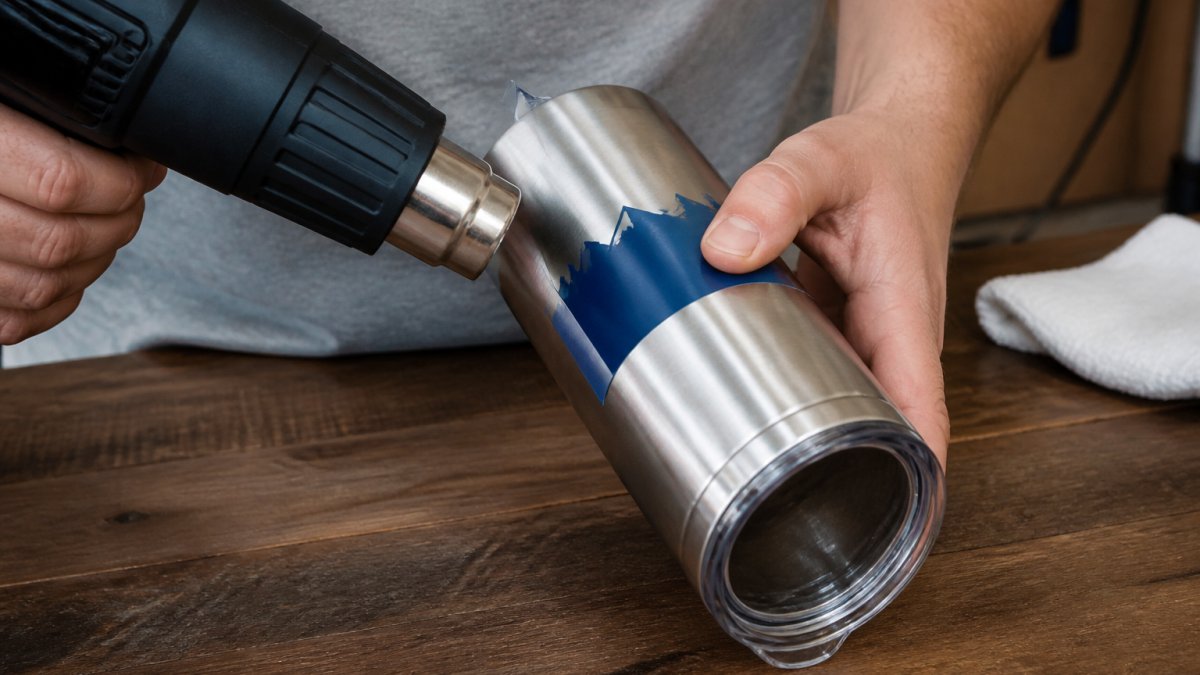
Step 2: Start at a corner. Gently lift one corner with a soft plastic scraper or credit card, never use metal tools. Apply gentle, steady pressure.
Step 3: Peel slowly. Pull the vinyl at a low angle, almost parallel to the surface. Rushing causes tearing and fragments. If resistance is strong, apply more heat rather than forcing. For large decals, peel in sections.
Step 4: Remove the entire decal. Work around the vinyl, heating and peeling as you go. Once the main vinyl is off, adhesive residue will likely remain.
Method 2: Solvent-Based Removal
If heat alone doesn't work or the vinyl is aged and brittle, solvents can break down the adhesive bond. This method is effective but requires care to protect the finish and your health.
Step 1: Prepare your workspace. Ensure good ventilation. Rubbing alcohol has a strong smell and is flammable, so work near a window and away from open flames or heat sources.
Step 2: Apply solvent carefully. Dampen a cloth with rubbing alcohol (70-90%) or specialized vinyl remover. Do not soak; excess liquid can seep under the coating and cause discoloration. Wipe gently and let sit 1-2 minutes.
Step 3: Peel with the solvent. Using a soft plastic scraper, gently lift the vinyl. Work slowly and reapply solvent as needed. Alternate between gentle heat (20-30 seconds) and solvent for stubborn vinyl.
Step 4: Wipe away excess solvent. Once the vinyl is removed, wipe with a damp cloth and dry thoroughly. Do not leave wet, as moisture causes water spots or rust.
Rubbing alcohol is safer than acetone or paint thinner. It evaporates quickly and doesn't damage coatings when used properly. Never apply solvents to the interior or near lid seals, as they can compromise the drinking surface or seal integrity.
Method 3: Combination Approach for Stubborn Vinyl
For aged or fragile vinyl, use heat and solvent together. Apply heat for 30-45 seconds, then immediately apply solvent. The heat opens the adhesive's pores for deeper penetration. Peel gently while warm. This takes longer but reduces tearing risk.
How to Remove Vinyl Residue From Stainless Steel
After the main vinyl is gone, adhesive residue often remains. Warm it with a heat gun for 20-30 seconds, then rub away with a soft cloth using light pressure. For stubborn residue, apply rubbing alcohol to a cloth and rub gently in circular motions. A slightly dampened magic eraser sponge also works; test on a small area first.
Will Rubbing Alcohol Remove Vinyl From Your Tumbler
Rubbing alcohol works best combined with heat rather than alone. Apply heat first to soften the vinyl, then use rubbing alcohol to lift stubborn edges or remove residue. Use 70-90% isopropyl alcohol, apply sparingly, and wipe away excess promptly.
Can You Use Goo Gone on Stainless Steel Tumblers
Commercial adhesive removers can work but require caution. Test on a hidden area first, apply sparingly with a cloth, do not let sit long, and wipe thoroughly. Heat and rubbing alcohol often accomplish the same goal with less risk to the finish.
Common Mistakes to Avoid When Removing Vinyl
Mistake 1: Metal scrapers scratch coatings instantly; use soft plastic, credit cards, or wood. Mistake 2: Excessive heat warps tumblers or damages seals; keep heat guns on low to medium. Mistake 3: Rushing causes tearing; slow peeling takes 5-10 minutes. Mistake 4: Harsh solvents strip coatings; use rubbing alcohol only. Mistake 5: Skipping prep makes removal harder; always clean first. Mistake 6: Ignoring residue looks messy; remove all before finishing.
Cleaning and Caring for Your Tumbler After Vinyl Removal
Once vinyl and residue are gone, clean and inspect the tumbler thoroughly before reuse. Solvent residue or adhesive particles can affect safety and taste.
Immediate Cleaning After Vinyl Removal
Wash with warm soapy water and soft cloth, paying attention to seams and textured areas. Rinse at least three times; if chemical smell persists, rinse again. Dry immediately with a lint-free cloth, do not air-dry. Inspect the interior for residue, vinyl fragments, or discoloration. The interior must be completely clean before drinking from the tumbler.
Checking for Finish Damage
Inspect the exterior for any damage caused by the removal process.
Minor scratches: Small scratches in the powder coating are normal and usually don't affect function or safety. They do not compromise the tumbler's ability to hold beverages.
Significant coating damage: If large areas of the powder coating are missing or the bare stainless steel is exposed, the tumbler is still usable but may be more prone to rust over time, especially if exposed to salt or acidic beverages. Hand wash and dry immediately after use. Do not store with liquids inside for extended periods.
Discoloration: If the stainless steel has darkened or shows water stains, this is cosmetic and does not affect safety. You can polish the exterior with a stainless steel cleaner if desired.
Food-Contact Safety and Reuse
Before using the tumbler for beverages, confirm that it is safe for food contact.
Solvent residue: If you used rubbing alcohol or a commercial adhesive remover, ensure all residue is gone. Rubbing alcohol is not food-safe in high concentrations. The smell test is a good indicator: if any chemical odor remains after thorough rinsing, do not use the tumbler for drinking yet. Rinse again and let it air-dry for 1-2 hours, then rinse once more.
Adhesive particles: Any remaining adhesive or vinyl fragments must be removed. These are not food-safe and can affect the taste of beverages. If you find small fragments stuck to the interior, use a soft cloth dampened with warm water to gently wipe them away. Do not use sharp tools inside the tumbler, as they can scratch the interior finish.
Lid and seals: If you used solvents during removal, inspect the lid and rubber seals carefully. Solvents should never have contacted these parts, but if they did, rinse the lid separately with warm soapy water and dry thoroughly. Check that the seal still fits snugly and does not smell of chemicals.
Long-Term Care and Storage
For ongoing care, hand wash your tumbler rather than using a dishwasher. The heat and agitation of dishwashers can wear down the powder coating faster and may damage the lid seals over time. Use mild soap and warm water. Dry immediately to prevent water spots.
Store the tumbler with the lid off if possible, allowing air circulation inside. This prevents moisture buildup and mold growth. If you store it with the lid on, ensure the interior is completely dry first.
Reusing or Repurposing Your Tumbler
Many people choose to reuse or repurpose their tumblers after removing vinyl. A blank stainless steel tumbler with a quality powder coating is still functional and attractive. You have several options:
Apply new vinyl: If you plan to apply new vinyl, clean the surface thoroughly with warm soapy water and let it dry completely. Wipe the exterior with a lint-free cloth to remove any dust. A clean surface ensures better adhesion for the new design. Wait at least 24 hours after solvent use before applying new vinyl to ensure all chemical residue has fully evaporated.
Use as plain drinkware: A blank tumbler is a versatile option for everyday use. The stainless steel construction keeps beverages hot or cold, and the powder coating provides a comfortable grip and durable finish.
Gift or repurpose: If you no longer want the tumbler, it makes a useful gift or can be donated. The tumbler is still fully functional and can be used by someone else.
Frequently Asked Questions
Will rubbing alcohol remove vinyl from a tumbler?
Rubbing alcohol can help soften adhesive residue after vinyl is peeled away, but it won't remove the vinyl itself. Isopropyl alcohol works best on leftover sticky spots rather than as a primary removal method. Apply it to a lint-free cloth and wipe gently on the stainless steel surface. Always test on a small area first to ensure it doesn't affect the tumbler's finish or any remaining design.
Can you use Goo Gone on stainless steel tumblers?
Goo Gone and similar adhesive removers can work on stainless steel, but use them cautiously. These products are strong and may dull the matte powder coating on your tumbler if left on too long. Apply sparingly to a cloth rather than directly on the surface, work in small sections, and wipe thoroughly with soap and water afterward. Always test on an inconspicuous area first to confirm it won't damage your tumbler's finish.
How do you remove vinyl without scratching or damaging a tumbler's finish?
Avoid metal scrapers, scouring pads, and abrasive tools that can scratch the powder coating. Instead, use heat to soften the adhesive so vinyl lifts away cleanly, or apply solvents that dissolve the glue without requiring scraping. Work slowly and patiently; rushing is the biggest cause of surface damage. Always use soft tools like plastic scrapers or your fingernail, and test any chemical on a hidden spot first.
Can heat help remove vinyl from a stainless steel tumbler?
Yes, heat is one of the safest removal methods for stainless steel. A heat gun or hair dryer softens the adhesive backing, making the vinyl peel away more easily without damaging the finish. Keep the heat source moving to avoid overheating one spot, and work at a distance of 4-6 inches. This method is especially effective for vinyl that's been on the tumbler for months, as older adhesive becomes more brittle and responsive to gentle warming.


